

Ductless mini-splits and window air conditioners can both cool individual rooms effectively. However, the better choice depends on your budget, property, and long-term goals. Window AC units offer an affordable, portable solution for seasonal cooling. Ductless mini-splits can deliver better efficiency, quieter operation, and year-round heating and cooling.
Understanding the advantages and limitations of each system can help you choose. This article explains how both options work and what to consider before deciding.
What Is a Window AC?
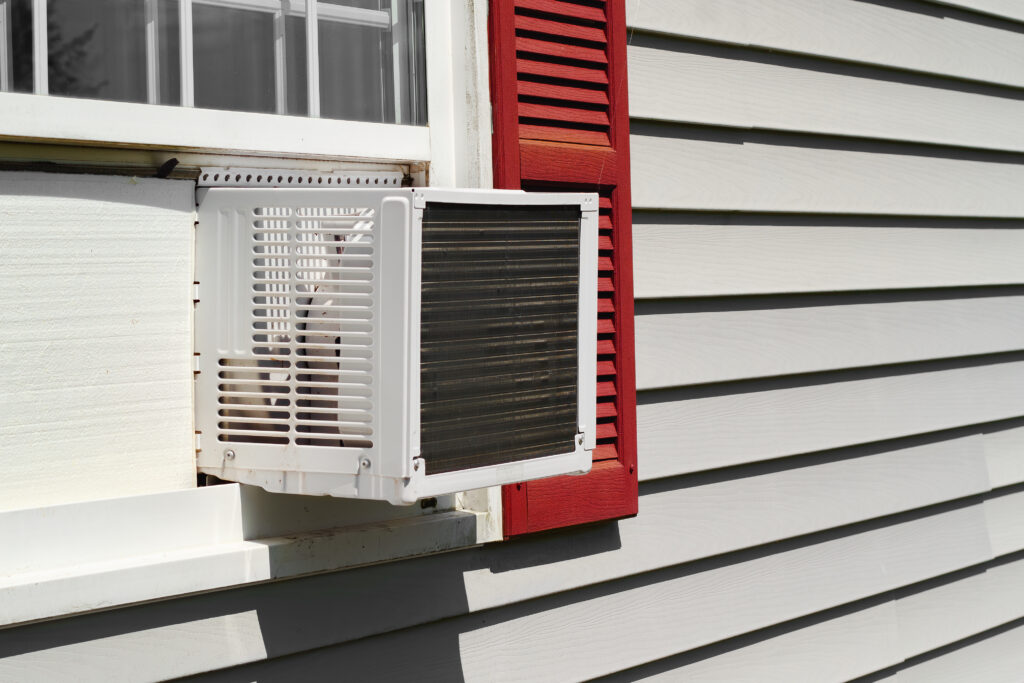
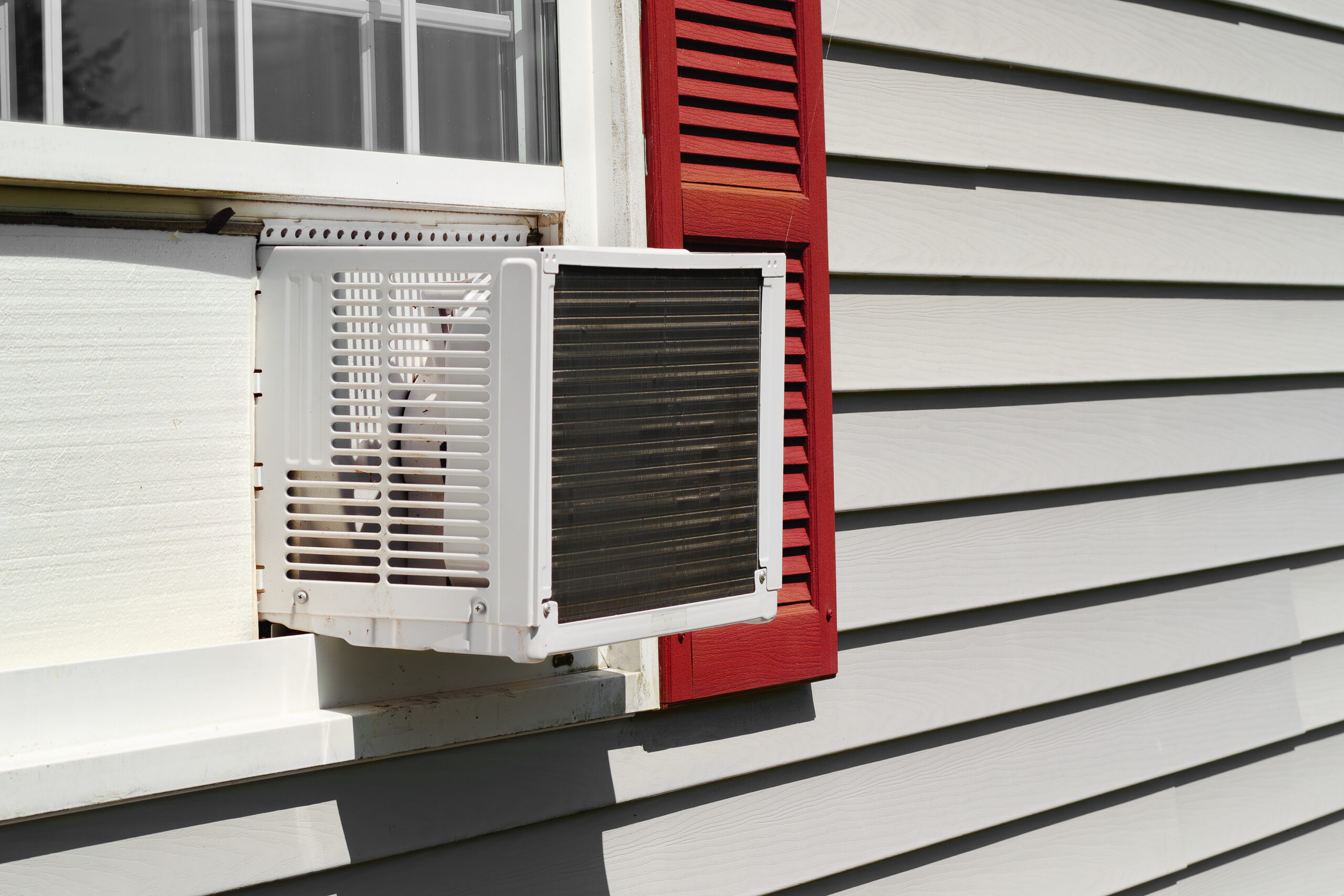
Window air conditioners pack all cooling components into a single unit. The compressor, condenser, and fans fit inside one box. Many window AC units can last for several years with proper care. However, most property owners use them for temporary seasonal cooling.
Their compact form allows them to fit inside many standard window frames. The cooling mechanism pulls warm air from the room and vents heat outside. It then blows chilled air back into the living space. These units can serve tight spaces, seasonal vacation homes, and older properties.
Window AC units cool a room using the same basic refrigeration cycle as other air conditioners. The compressor circulates refrigerant between the outdoor condenser coil and indoor evaporator coil. The condenser releases heat outside your home. The evaporator coil absorbs heat from the indoor air.
Window AC units have some limitations that homeowners should know about. Because they sit in an open window, creating a tight seal can be difficult. Conditioned air may escape, and outdoor air may enter. The outside portion can also affect your home’s appearance.
A window AC can also direct warm exhaust air onto outdoor living areas. That depends on the window location and nearby layout. These issues may not matter for short-term cooling. However, they can matter for long-term comfort and curb appeal.
Advantages of Installing a Window AC
- Affordable upfront cost: Window AC equipment usually costs less than a mini-split system.
- DIY installation: Many homeowners can install a window AC with basic tools.
- Targeted cooling: Window AC units cool specific living spaces.
- Simple replacement: You can buy a new unit at many hardware or home improvement stores.
What Is a Ductless Mini-Split?
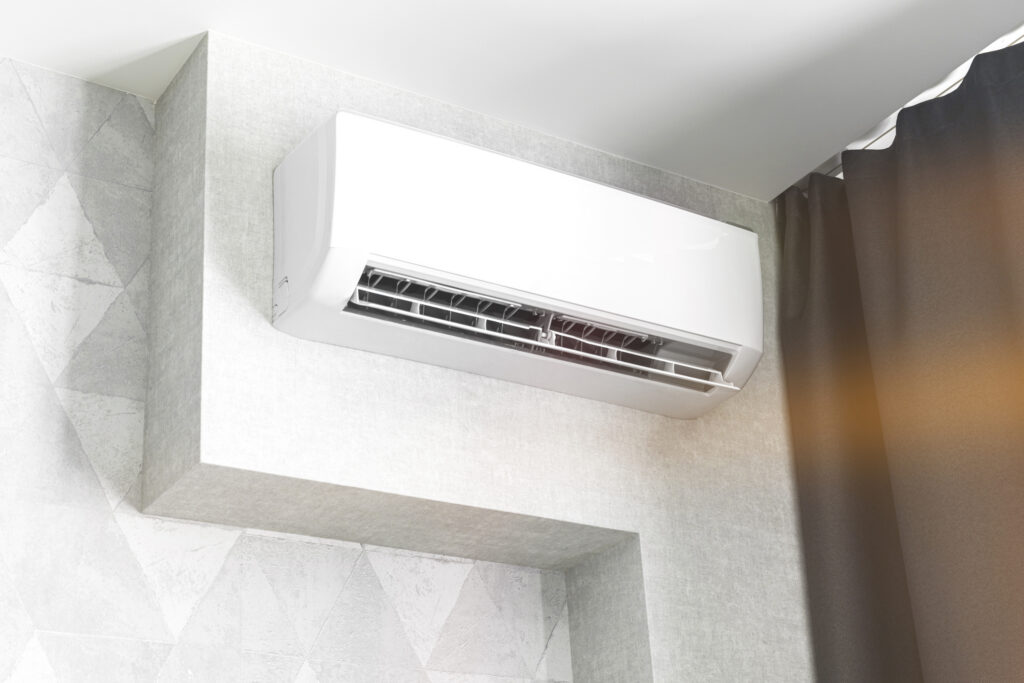
As its name suggests, a ductless system splits into two main parts. It has an outdoor compressor and one or more indoor air handlers. The parts connect through a conduit with wires, tubing, and refrigerant lines. Mini-splits deliver conditioned air directly into living spaces.
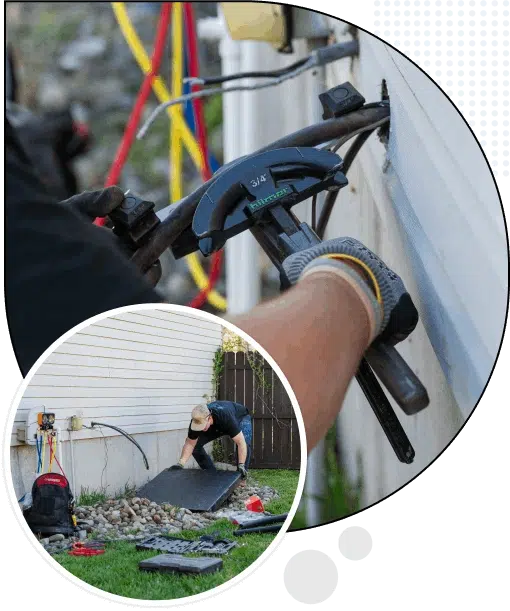
Mini-splits do not use traditional ductwork like central HVAC systems. They also do not sit inside a window. Unlike window AC units, ductless mini-splits require permanent professional installation. HVAC technicians mount the air handlers, also called head units, on interior walls.
Technicians then drill a small hole through the wall. This hole allows lines to connect to the outdoor compressor. The installation is more involved than a window unit. However, it also creates a cleaner, more permanent solution for comfort.
Modern mini-splits can provide quiet, energy-efficient cooling and heating. Many models use variable-speed technology for improved comfort and efficiency. That allows them to maintain steadier temperatures. Many systems also act as heat pumps and transfer heat instead of producing it directly.
In summer, heat pump mini-splits move heat out of your home. In winter, the mechanism reverses, moving heat indoors. Some cold-climate models can heat well when outdoor temperatures drop below freezing. That can make them perfect for year-round comfort in the Tri-State area.
Forced-air HVAC systems and window AC units often cycle on and off. Many variable-speed mini-splits adjust output more gradually. The system moves refrigerant through lines between the outdoor compressor and indoor head unit. By running at lower speeds, mini-splits can maintain consistent temperatures and reduce energy use.
Advantages of Installing Ductless Mini-Splits
- Year-round comfort: These systems can provide both heating and cooling.
- Keeps windows clear: Installation preserves natural light and outdoor views.
- Quieter operation: The noisy compressor sits outside your home.
- Strong energy efficiency: Variable-speed technology may lower energy use.
- Permanent convenience: You avoid seasonal installation and removal.
How to Choose Between a Ductless Mini-Split and Window Units
The right cooling system depends on your goals, property type, and budget. Both window AC units and ductless mini-splits can work for Tri-State homeowners. Your choice should balance immediate costs against long-term comfort. It should also account for installation limits and property rules.
Start by considering your budget. Window AC units offer a lower upfront cost. If you are preparing a summer rental, a window AC can be quick and affordable. Mini-splits cost more to install and are an investment in a property.
Mini-splits also require professional installation, which adds to upfront costs. However, they may save money over time through better efficiency. They can also add comfort and value to the property. That makes property type an important factor.
If your home has condo association rules, exterior equipment may be restricted. Similar rules may apply to some historic shore properties. In those situations, window AC units may be more practical. Always check property rules before choosing permanent equipment.
If your property allows exterior compressors, mini-splits may make more financial sense. They do not block windows or disrupt indoor natural light. They can also support year-round climate control. Window AC units only cool your space.
Mini-splits can provide heating and cooling with advanced heat pump technology. They can help keep your living space cool in July and warmer in January. You should also consider noise and indoor air quality factors. Window AC units can rattle, buzz, or interrupt sleep.
Most window AC models have basic filters for larger particles. Mini-splits place compressor noise outside the home. Their indoor air handlers tend to run quietly while maintaining consistent temperatures. Their filtration may also help reduce dust and other airborne particles.
That said, mini-splits still need routine maintenance. Filters need cleaning, and the system needs professional service. Window units also need cleaning and proper seasonal storage. Either option works best when sized correctly for the room.
Schedule Ductless Mini-Split Installation Today
When comparing window AC units with ductless mini-splits, mini-splits are often the better long-term solution. Both cooling options have pros and cons. Window AC units can work well for short-term cooling or limited budgets. Mini-splits are often better for permanent comfort and year-round efficiency.
At Instant Services, we offer professional mini-split installation in the Tri-State area. Our friendly, background-checked technicians respect your time, property, and comfort. We focus on service, not sales, and provide clear communication. We also offer upfront pricing, same-day availability, and 24/7 service.
To reduce upfront costs, financing is available on approved credit. We also offer estimates for replacement projects.
Contact Instant Services for a ductless mini-split consultation in the Tri-State area.